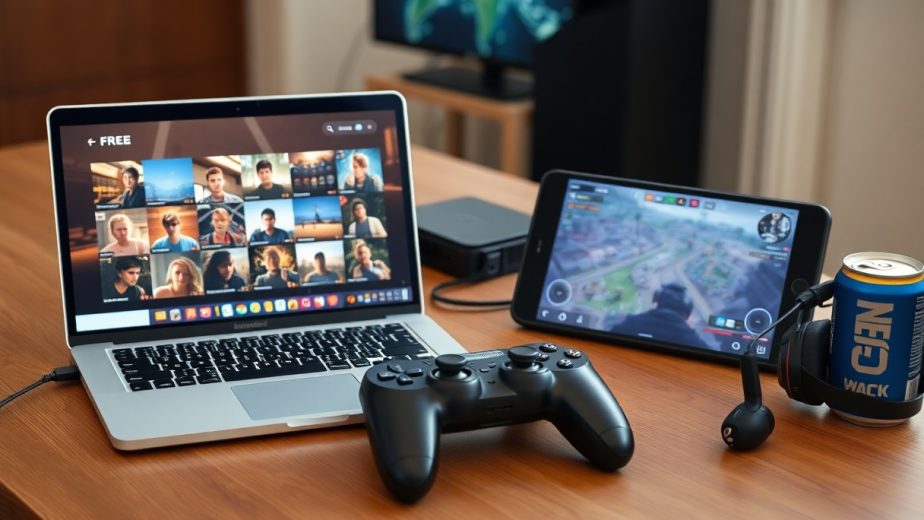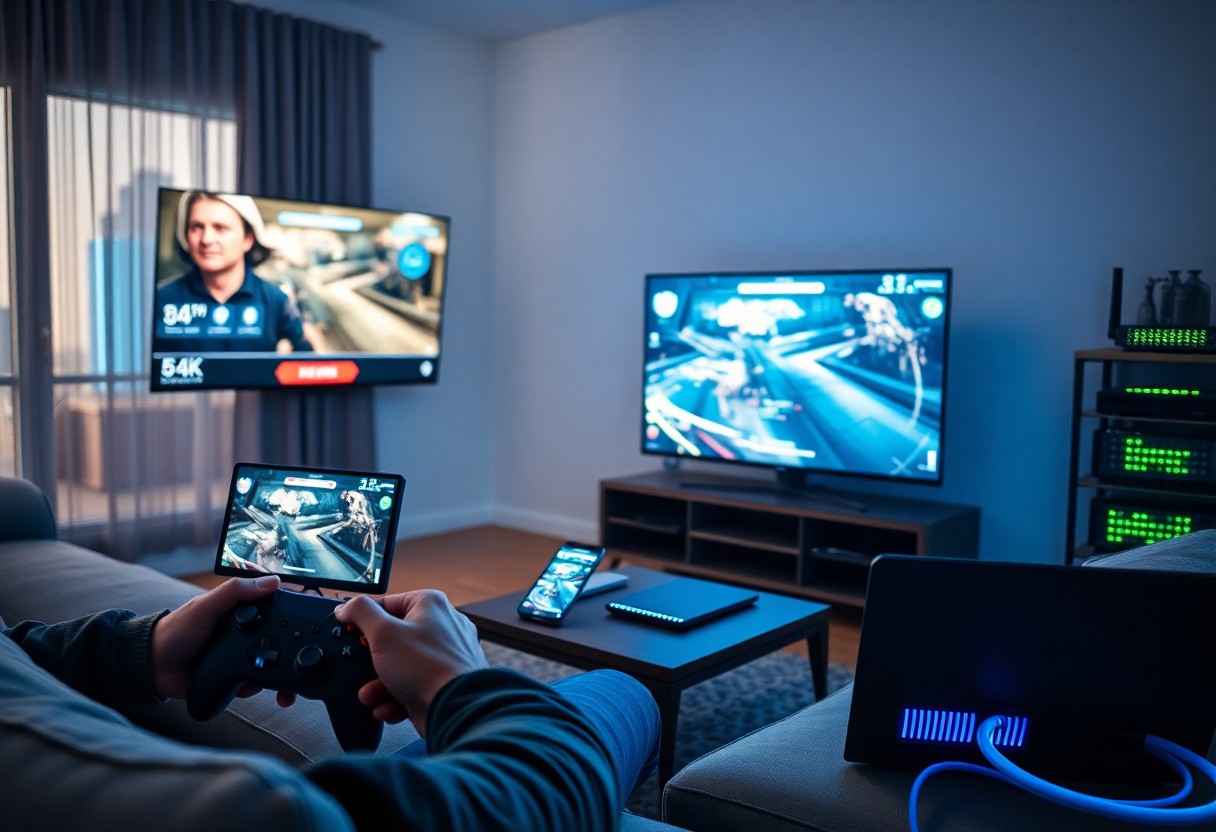
Future cloud gaming lets you stream high-end titles to any device, offering instant access and lower hardware costs while raising privacy and latency risks and forcing developers to adjust business models; you should weigh massive audience growth against these trade-offs.
Primary Types of Cloud Gaming Architectures
Clouds host the main models you encounter: subscription-based streaming, hardware-as-a-service, and edge-assisted hybrid, each shaping how you access titles and controls. You must compare latency, cost, and device compatibility to pick what fits your playstyle.
Different approaches shift processing from your device to provider infrastructure, increasing accessibility while raising risks like latency spikes and outages that can harm competitive play.
| Subscription Streaming | You stream from provider GPUs with minimal local hardware needs. |
| Hardware-as-a-Service | You rent dedicated GPU instances for higher fidelity sessions. |
| Edge-Assisted Hybrid | You benefit from nearby edge servers to reduce latency. |
| Client Offload | You offload heavy tasks while keeping input processing local to lower delay. |
| Private Cloud | You operate or partner with private farms for strict control and security. |
- Subscription-based streaming
- Hardware-as-a-service
- Edge-assisted hybrid
- Client offload
- Private cloud
Subscription-Based Streaming Services
Services let you stream full games to phones and low-power devices, removing install barriers and lowering upfront expense while increasing network dependence; you should monitor data caps and latency variability.
Hardware-as-a-Service Infrastructure
Hardware rentals give you access to high-end GPUs without upgrades, enabling consistent settings and high visual fidelity, though you may face pricing volatility and provider-side security considerations.
You can scale sessions quickly and avoid local upgrade costs, but you must design redundancy and verify performance guarantees. Thou verify clear SLAs, backup options, and provider incident records before committing.
Critical Factors Influencing Service Quality
Latency determines how responsive games feel, and you notice delays immediately; latency and packet loss directly degrade competitive play and streaming fidelity.
- Bandwidth availability
- 5G coverage
- Edge computing presence
- Server distribution and redundancy
- QoS and congestion management
Broadband Infrastructure and 5G Integration
Broadband growth and expanded 5G access change expectations for you, requiring consistent bandwidth and low variability so input lag and buffering remain minimal.
Server Distribution and Edge Computing
Geographic placement of servers plus edge computing reduces data travel time, so you experience lower latency and faster load times when providers place nodes near player concentrations.
Any increase in local microdata centers and CDN peering reduces hops and packet loss, letting you maintain steady frame rates and quicker matchmaking.
Analyzing the Pros and Cons of Cloud Adoption
You will find cloud gaming lowers the barrier to entry by removing expensive hardware upgrades and enabling instant access to titles, but you must weigh that against dependence on internet quality and platform policies that can restrict ownership.
Consider how on-demand scaling and centralized updates let you access new features quickly; you also confront privacy concerns, potential vendor lock-in, and ongoing subscription costs that can outpace one-time purchases.
| Pros | Cons |
|---|---|
| Lower upfront costs for hardware | Requires high-speed internet |
| Play on multiple devices | Latency and input lag |
| Instant updates and patches | Ongoing subscription fees |
| Easy scalability for demand | Possible vendor lock-in |
| Large shared libraries | Limited offline play |
| Lower local maintenance | Server outages affect access |
| Energy and space savings | Data caps and bandwidth costs |
| Faster testing for developers | Reduced control over mods and saves |
Elimination of Hardware Barriers and Costs
Cloud streaming lets you run AAA titles on modest devices, so you avoid buying expensive GPUs and enjoy immediate access to current releases without waiting for upgrades.
Savings from skipped upgrades allow you to allocate budget elsewhere, though you should compare long-term subscription expenses versus the lifetime value of owned hardware.
Latency Concerns and Data Usage Limits
Network performance dictates playability, and you will notice reduced responsiveness when latency rises, especially in competitive or timing-sensitive games.
High streaming rates mean you can quickly hit ISP data caps or face overage charges, so you must monitor usage and pick plans that match your play habits.
Testing connections at different times helps you find peak congestion windows; you can reduce issues with wired connections, local data centers, or adaptive quality settings, but you should plan for residual packet loss and region-based variability.
How Cloud Gaming Is Changing the Future of Video Games
| Focus | Action |
|---|---|
| Network | Test latency, reduce packet loss, and prefer wired Ethernet or a high-quality 5GHz link |
| Peripherals | Enable low-latency modes, update firmware, and use wired connections when possible |
Assessing Network Capability and Stability
Test your connection with Speedtest or a ping tool, monitor jitter, and target ping under 40 ms and packet loss below 1% to prevent frame drops and input lag.
Configuring Peripherals for Low-Latency Input
Configure your controller, keyboard, or mouse to use their low-latency modes, connect via wired USB when possible, and disable power-saving features that add input delay.
Use polling rates of 500-1000 Hz for mice, keep firmware and drivers updated, and choose a dedicated wireless dongle over Bluetooth to minimize hops and latency spikes.
Essential Tips for a High-Fidelity Experience
Optimize your home network by prioritizing low latency and reducing jitter to preserve responsiveness in cloud gaming sessions. You should monitor upstream bandwidth and limit background uploads that cause packet loss.
- QoS configuration for gaming traffic
- Bandwidth caps for backups and updates
- Latency and packet loss monitoring
Reduce wireless interference by using wired Ethernet for consoles and PCs when possible to maintain consistent bitrate and lower packet loss. You can also schedule large downloads outside play windows to keep streams stable.
Prioritizing Traffic via Quality of Service (QoS) Settings
Configure your router to prioritize game and streaming packets so household congestion doesn’t translate into input lag; tag UDP flows and reserve upstream for interactive frames. You should verify firmware options and apply QoS rules that favor low latency.
Selecting Optimal Resolution and Framerate Targets
Set target resolution and framerate based on your measured connection: choose lower resolution to reduce required bandwidth when jitter or packet loss appears, and prefer steady framerates for better control feel. You should test adaptive modes that reduce pixels before dropping frames.
Balance bitrate caps and adaptive encoding so the stream adjusts before visual quality collapses. The key is keeping frame timing consistent to avoid added lag and judder.
The Future Impact on Industry Development
Cloud ecosystems will push you to think in terms of continuous delivery and global scale, forcing publishers to optimize for latency and concurrency. Broader access expands audiences, while platform lock-in and data control create strategic risks you must manage.
Platforms increasingly control distribution, so you will compete on services like matchmaking, anti‑cheat, and live ops. Expect business models to shift toward subscription and metrics-driven updates; data-driven personalization will be a major advantage and a potential privacy concern.
Emergence of Cloud-Native Game Mechanics
Developers must design for persistent, cross-session worlds so you can create experiences that span devices and time. Real‑time orchestration enables massive shared events, but increases attack surface and complexity for security and fairness.
Design shifts toward streaming assets and server‑side simulation, enabling infinite‑scale multiplayer and dynamic content. You will balance performance costs with emergent play, and invest more in cloud tools for testing and iteration.
Shift from Physical Ownership to Access Models
Consumers will find it easier to try titles instantly, yet you may lose permanent access to games when services change. Convenience grows player reach, while loss of ownership poses legal and archival challenges.
Libraries curated by providers will shape discovery and retention, so you will rely on catalog breadth and exclusives to keep subscribers. Beware that DRM dependence can limit offline play and resale options.
Revenue models will pivot to recurring fees and microtransactions, meaning you must focus on long‑term engagement metrics; subscription fatigue and shifting publisher economics can threaten profitability if retention drops.
Summing up
Ultimately you will access high-end games on modest devices, pay through subscriptions or per-play models, and benefit from faster updates and larger multiplayer ecosystems. Developers will offload processing, experiment with live services, and lower barriers to entry, which expands your choices and shortens release cycles. As networks and codecs improve, you should expect richer, more social experiences streamed instantly and priced around convenience rather than hardware ownership.