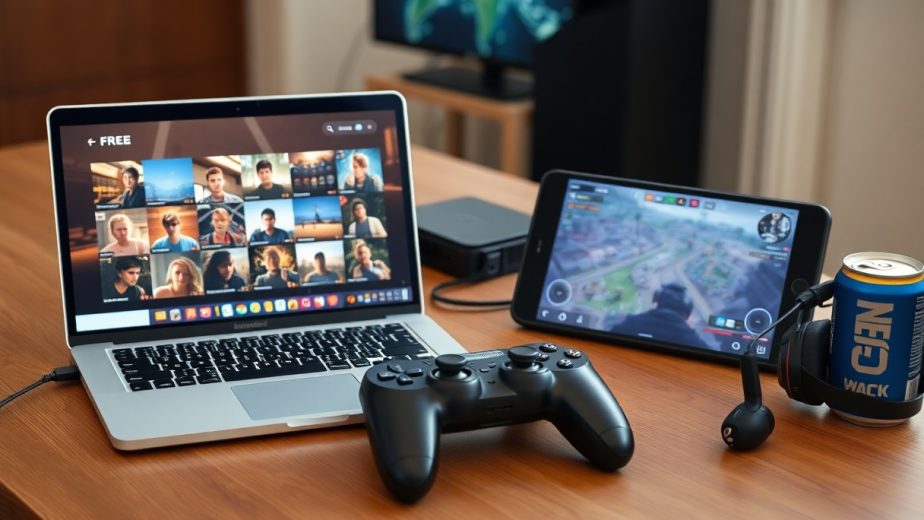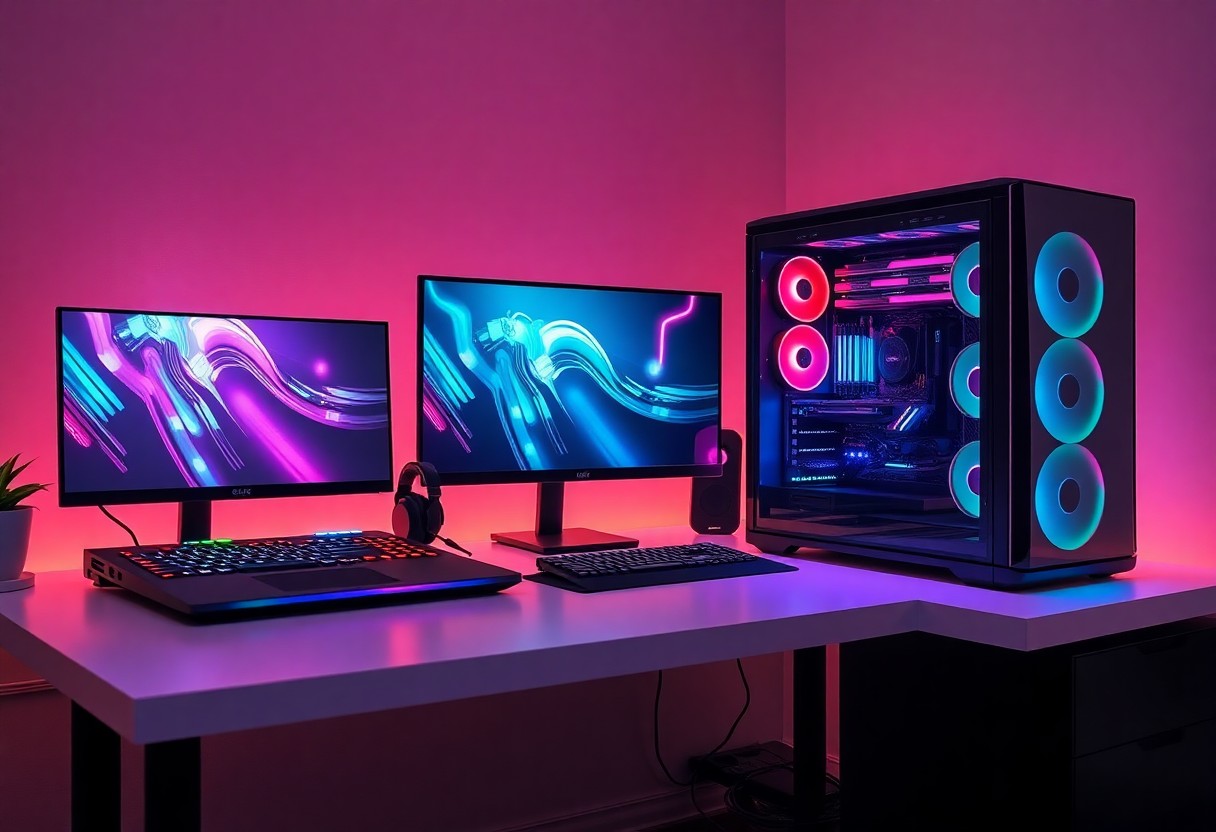
Laptops offer portability and convenience but limit upgradeability and can have heat and battery issues, while gaming PCs deliver superior performance per dollar and easy upgrades; you must balance portability against raw power when choosing.
Critical Factors Influencing Your Decision
Budget often forces choices between gaming laptops and gaming PCs, with trade-offs in battery life, upgrade paths, and sustained performance; you should weigh upfront cost against long-term upgradability and repairability.
- gaming laptops – portability, battery, integrated thermals
- gaming PCs – higher sustained performance, modular parts, stronger cooling
- Thermals – risk of overheating and throttling on compact systems
- Ergonomics – long sessions favor desktop setups
Longevity matters because you must decide if you want easy part swaps or a portable all-in-one; Perceiving whether you prioritize mobility or long-term performance will guide the final choice.
Hardware Performance and Thermal Efficiency
GPU performance in desktops typically outpaces laptops, so you get higher sustained frame rates and better cooling; you should expect less thermal throttling on a full-sized PC.
Portability and Ergonomic Requirements
Compact systems let you game anywhere, but you trade away desktop-grade cooling and often a full-size keyboard, which can increase heat buildup and harm extended comfort.
Setup options differ: you can dock a laptop to regain desktop ergonomics, while a PC gives you dedicated space for proper monitors, chairs, and airflow, reducing strain and heat risk.
Consider how often you travel and how long your sessions are; if you move frequently choose a laptop for portability, while lengthy, competitive play usually favors a desktop for superior thermal management and ergonomic support.
Exploring the Different Types of Gaming Hardware
Varieties include compact gaming laptops you carry for portability and full-sized gaming PCs you expand for sustained performance and long-term upgradeability.
Consider trade-offs such as thermal throttling that can cap laptop clocks while desktops offer better cooling and swap options. Assume that you prioritize either mobility or peak performance.
- gaming laptops
- gaming PCs
- pre-built
- custom build
- ultra-portable
- desktop replacement
| Form factor | Compact laptops vs full towers with room for cooling and large GPUs |
| Upgradeability | Laptops: limited; Desktops: you can swap CPU, GPU, storage, and cooling |
| Thermals | Laptops risk thermal throttling; desktops sustain higher clocks with better cooling |
| Portability | Laptops give mobility and battery trade-offs; desktops stay stationary but deliver steady power |
| Cost-to-performance | Desktops usually offer more performance per dollar; laptops charge a premium for size |
Desktop Configurations: Pre-built vs. Custom Builds
Options include pre-built systems you buy tested with warranty and support, or custom builds you assemble to match exact goals and squeeze extra performance-watch for part compatibility and warranty gaps.
Laptop Variations: Ultra-portables vs. Desktop Replacements
Choices range from ultra-portables you take everywhere with modest GPUs and long batteries to desktop replacements that prioritize raw GPU power and sustained clocks at the cost of weight and heat.
Battery constraints often force you to accept lower sustained clocks on ultra-portables, while desktop replacements deliver higher sustained performance but reduce portability and increase heat.
Pros and Cons: A Side-by-Side Comparison
Compare the trade-offs: you gain portability and integrated peripherals with a gaming laptop, but you sacrifice sustained thermal performance and upgrade flexibility compared with a desktop. You should expect a higher cost per frame and potentially louder operation during heavy play.
Pros and Cons: Gaming Laptops vs Gaming PCs
| Gaming Laptops | Gaming PCs |
|---|---|
| Highly portable and all-in-one | Stationary; needs dedicated space |
| Good performance but thermally constrained | Top-tier sustained performance |
| Limited upgrades (RAM/SSD) | Easy component swaps and upgrades |
| Higher price per performance | Better value and entry options |
| Hotter and often noisier under load | Superior cooling and quieter operation |
| Battery allows on-the-go sessions | No battery; constant power supply |
| Integrated display/keyboard included | Requires separate peripherals you can choose |
| Faster obsolescence for high-end parts | Longer useful life via upgrades |
Weigh your priorities: choose a laptop if you need mobility and compact convenience, or pick a PC if you value maximum performance and easier future upgrades.
Evaluating Mobility and Integrated Peripherals
Portability matters when you move between locations: you can game anywhere with a laptop and its built-in display and peripherals, but battery life limits session length and performance often drops on battery. You should test real-world battery and thermal behavior for your use case.
Analyzing Customization and Long-term Value
Upgradeability shapes long-term cost: you can replace GPUs, CPUs, and cooling in a desktop to extend lifespan, while laptops typically limit you to RAM and storage, which affects how often you must replace the whole system.
Long-term ownership favors desktops for better upgrade ROI and lower replacement frequency; you can incrementally improve a PC to maintain competitive performance without buying a full new machine.
Step-by-Step Guide to Selecting Your System
Assess your priorities and constraints: weight, desk space, and how long you plan to keep the machine. Aim for a balance between desired frame rates and budget; portable options trade some raw power for convenience.
Quick Comparison
| Gaming Laptop | Gaming PC |
|---|---|
| Portability and built-in display; mobility for LANs and travel | Higher raw performance per dollar and easier upgrades |
| Thermals are constrained; risk of thermal throttling under load | Better cooling options and sustained high FPS |
| Limited upgrade paths; battery life varies | Modular upgrades, often lower long-term cost |
Defining Your Primary Gaming Use Case
What you play and where you play determines whether you need a laptop for on-the-go sessions or a desktop for max settings. If competitive FPS at high refresh is your goal, prioritize monitor and GPU specs; if cinematic single-player titles matter, favor GPU memory and CPU cores.
Establishing a Realistic Performance Budget
Decide target resolution and FPS first, then align GPU/CPU tiers to those targets. Allocate more budget to graphics when chasing steady high frame rates, and accept compromises on storage or aesthetics if needed.
Allocate roughly 60-70% of a desktop budget to the GPU for gaming; expect laptops to cost more for similar GPU power. Watch for thermal throttling and short battery life as potential trade-offs when prioritizing portability.
Expert Tips for Optimizing Your Gaming Experience
- Gaming laptops
- Gaming PCs
- Cooling solutions
- Hardware upgrades
Follow targeted adjustments in settings and drivers to get the best out of either gaming laptops or gaming PCs; you should tune resolution, frame limits, and power profiles to prevent thermal throttling and maximize framerate.
Effective Cooling Solutions and Maintenance
Clean air intakes and fans monthly, use compressed air for laptops, and replace dried thermal paste to lower temperatures so you avoid overheating that causes crashes and reduced component life.
Consider a quality cooling pad for laptops and add intake/exhaust fans or a better CPU cooler in PCs; you can monitor temps with software and set fan curves to balance performance and noise.
Strategic Upgrades to Extend Hardware Lifespan
Prioritize upgrades like NVMe SSDs and additional RAM before expensive GPU swaps, since you often get noticeably better responsiveness and reduced load on older components while keeping power draw manageable.
Any upgrade you apply, test stability and monitor temperatures; avoid aggressive overclocking or overvolting without adequate cooling because overvolting can void warranties and permanently damage components.
Final Words
Presently you must choose between gaming laptops and gaming PCs based on how you use games: you get portability and instant play with laptops, while desktops deliver higher performance, better cooling, and easier upgrades for the same price. You should consider budget, upgrade plans, and display preferences; choose a laptop if you travel or need space-saving, choose a desktop if you demand maximum frame rates, long-term upgradeability, and value per dollar.