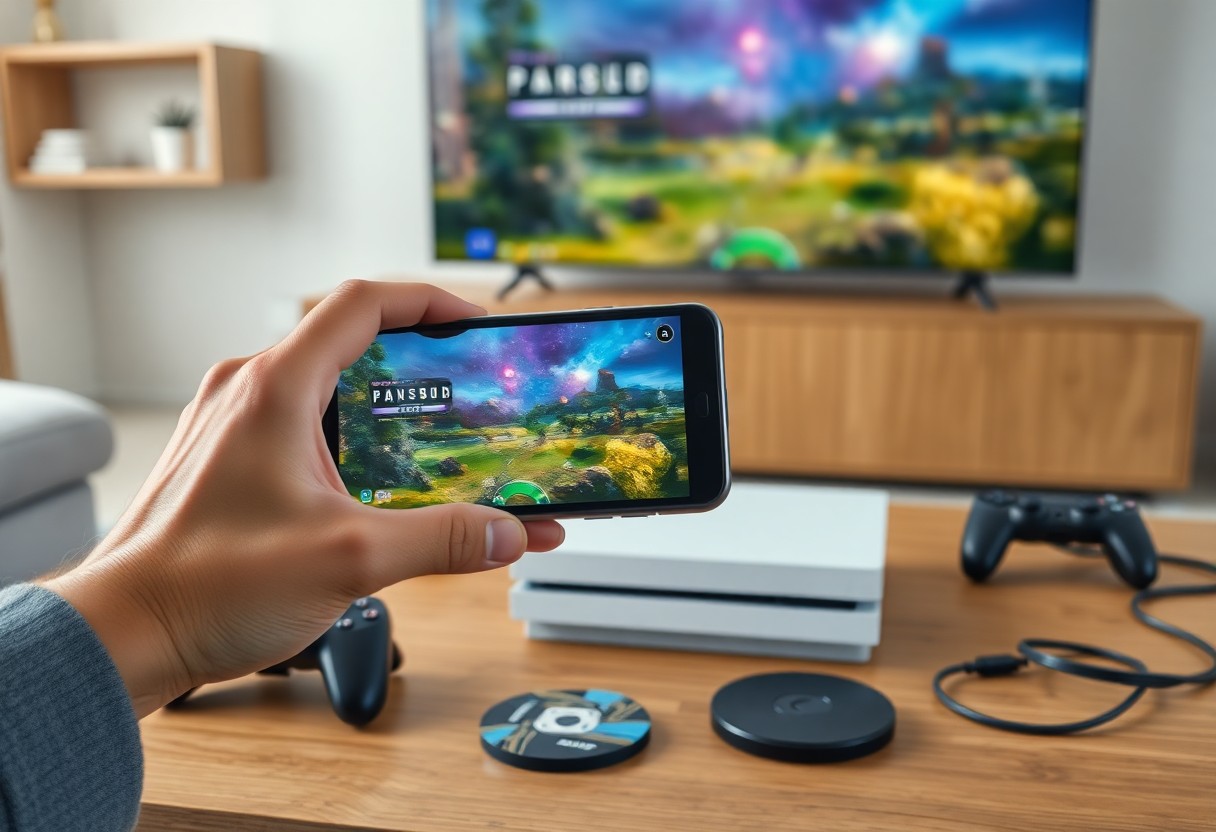
Mobile gaming has surged in popularity, so you should assess market growth, predatory monetization risks, and the convenience it offers versus console advantages like superior hardware and exclusives.
Defining the Ecosystem: Types of Modern Gaming Platforms
Platforms now include home consoles, handhelds, smartphones, tablets and cloud services, each affecting how you play through performance, controls and monetization. You should weigh trade-offs like graphics, latency and microtransactions when comparing mobile gaming to console gaming.
| Home Consoles | High raw performance, native controllers, and exclusive titles that drive long play sessions. |
| Handhelds | Portable hardware with dedicated controls and local multiplayer options; often premium in price. |
| Smartphones | Ubiquitous access, touch controls and massive user bases; common free-to-play models. |
| Tablets | Larger screens for richer visuals and comfort; bridge between handheld and desktop experiences. |
| Cloud / Streaming |
|
High-Performance Home Consoles and Handhelds
Consoles deliver sustained frame rates, advanced GPUs and tactile inputs so you can experience immersive titles and competitive play with minimal lag. You will find that exclusive franchises and local multiplayer continue to anchor dedicated console communities, while handhelds offer portability without entirely sacrificing power.
The Proliferation of Smartphone and Tablet Gaming
Smartphones put games in your pocket, driving huge audiences through accessible controls and social distribution; you encounter many free-to-play mechanics and frequent updates that maximize engagement. Tablets amplify that reach with bigger screens, making certain genres feel closer to traditional gaming.
Recognizing how monetization, accessibility and hardware converge helps you judge whether mobile gaming complements or competes with console gaming for your time and spending.
Critical Factors Driving the Shift in Market Share
Mobile improvements and app-store reach give you a vastly larger active audience than consoles, boosting discovery and social loops while lowering per-player acquisition friction; this creates scale that publishers exploit with frequent updates and community features.
- mobile gaming
- console gaming
- monetization
- portability
You will notice that platform economics differ: consoles favor high upfront pricing and deep, paid experiences, while mobile emphasizes volume, repeat engagement, and live services revenue models that change how market share shifts over time.
Accessibility and the Convenience of Portability
Portable devices put top-tier games in your pocket, so you can play during short gaps and reach multiplayer sessions without a living-room setup, which expands casual and core audiences simultaneously.
Your expectations about instant access and cross-device continuity push developers to optimize session lengths, controls, and UI for touch and small screens, making accessibility a persistent competitive edge.
Evolution of Monetization and Live Service Models
Monetization moved from one-time purchases to free-to-play, microtransactions, subscriptions, and event-driven spending, so you encounter continual incentives to return and spend over months and years.
Live operations fund ongoing content but introduce risks like pay-to-win perceptions and regulatory scrutiny; you must balance retention tactics with fair progression to protect brand trust and long-term value.
Developers now rely on analytics, segmented offers, and seasonal events to optimize lifetime value while preserving gameplay quality. Thou should track how retention, regulatory changes, and UA costs reshape which platform captures the majority of players and revenue.
Comparative Analysis: Pros and Cons of Each Medium
Consoles deliver superior graphical fidelity and precise input that you notice in AAA titles, while they demand higher upfront cost and remain less portable for on-the-go play.
Mobile provides instant access and ubiquity so you can play anywhere, but hardware limits and frequent predatory monetization often reduce depth and session quality.
Pros and Cons
| Pros | Cons |
|---|---|
| High-fidelity visuals on dedicated hardware | Lower graphical fidelity on many mobile devices |
| Precise controller input | Touch controls limit precision |
| Deep, long-form game experiences | Shorter, session-friendly mobile design |
| Exclusive, optimized titles | High upfront hardware cost |
| Local multiplayer and mod support | Reduced portability for console setups |
| Powerful hardware upgrade cycles | Device fragmentation for mobile platforms |
| Cinematic storytelling potential | Aggressive in-app purchases and ads |
| Stable input latency | Battery and thermal throttling on phones |
| Broad indie and AAA support | Discoverability and store barriers |
| Longevity through console generations | Rapid turnover and content churn on mobile |
Graphical Fidelity versus Universal Availability
High-end consoles render cinematic visuals and complex effects that you detect in lighting, textures, and fidelity during extended sessions.
You benefit from mobile’s play-anywhere convenience but accept reduced visual depth and occasional interruptions from monetization that break immersion.
Control Precision and Long-Form Gameplay Depth
Controllers on consoles provide tight input and ergonomic layouts that help you master complex mechanics without excessive fatigue.
Long-form RPGs and open worlds on consoles offer systems and pacing you can invest in, whereas mobile often shortens loops to fit quick sessions.
Complex competitive or rhythm-based inputs favor consoles, though you can pair controllers with mobile and face trade-offs like Bluetooth latency and battery drain that reduce responsiveness in high-stakes play.
Step-by-Step Guide to Enhancing Your Mobile Experience
| Tip | Action |
|---|---|
| Cross-platform accounts | Sign into the same publisher account across devices and enable cloud saves to keep progress synced. |
| Network | Use a stable Wi-Fi 5GHz connection and confirm sync completes before closing apps to avoid data loss. |
| Controller setup | Pair via Bluetooth or USB, update firmware, and map buttons using the game or official app for low latency. |
Configuring Cross-Platform Accounts and Cloud Saves
Set your platform logins to the same account and turn on cloud saves so your progress follows you; this gives instant recovery if you switch devices. Verify automatic sync and watch for conflicting saves before restoring to avoid overwrites.
Mapping External Controllers for Console-Level Precision
Pair your controller and open the game’s input settings or the manufacturer’s app to map buttons, adjust sensitivity, and choose low-latency modes for console-level precision. Keep firmware current to prevent drift and lag.
Adjust deadzones and trigger curves in small steps, testing in practice modes until the controls feel familiar; prefer official mapping tools since third-party mappers can cause input errors or account penalties.
Expert Tips for Maximizing Device Performance
Update your OS and game apps to get performance patches and reduce crashes; this also keeps sensors calibrated for better input. You should disable unneeded services to free system resources, protect against overheating, and sustain device performance.
Monitor background apps and notifications during sessions so RAM and CPU prioritize the active game. You can prioritize network traffic for lower ping in competitive play and limit processes that speed battery degradation.
- Enable game mode and performance profiles for smoother play
- Limit background syncing to free system resources
- Compare mobile gaming and console gaming defaults to match input response
- Use cooling aids to avoid overheating and extend battery longevity
Optimizing System Resources for Competitive Play
Limit background processes before matches so GPU and CPU are dedicated to your title and you maintain stable FPS. You should set sensible frame caps to reduce stutters and keep controls responsive.
Close chat-heavy apps and streaming services to prevent sudden latency spikes and extra power draw; this reduces the chance of overheating. You can also use minimal HUDs to keep inputs snappy for competitive play.
Managing Battery Longevity and Thermal Efficiency
Reduce screen brightness and cap refresh rates during long sessions to lower heat and preserve battery longevity. You should avoid charging in high temperatures since battery degradation accelerates under heat.
After you cool the device between heavy sessions and keep vents clear, you will extend both battery longevity and overall device performance while avoiding thermal throttling that can permanently harm batteries.
The Future Outlook: Integration or Displacement
Convergence between mobile and console ecosystems will shape what you choose next, as hybrid devices and cross-progression let you pick up games on any screen and keep progress. Developers will mix monetization and control schemes, and console exclusives will remain the main driver of high-end purchases, so you’ll still see distinct roles for each platform.
Expect niche console markets to persist where you demand precision, local multiplayer, and immersive graphics, while mobile keeps expanding reach through accessibility and social design. Watch for strategic partnerships and subscriptions that can shift purchase behavior without fully replacing dedicated hardware.
The Impact of 5G and Cloud Streaming Services
5G and cloud streaming let you access bigger titles on phones, lowering entry barriers and making portability more compelling, but data caps, inconsistent coverage, and latency spikes can break competitive or latency-sensitive sessions. If you rely on steady performance, you’ll still prefer local hardware for top-tier responsiveness.
Predicting the Trajectory of Dedicated Gaming Hardware
Console makers will emphasize exclusive experiences and premium performance to keep you buying hardware, while adding cloud features to broaden appeal; exclusive IP and advanced controllers will anchor hardware relevance even as services grow.
Manufacturers balancing cost, thermal limits, and service revenue will likely produce more modular or hybrid devices, so you should expect consoles to coexist with cloud-first options rather than disappear entirely.
Final Words
As a reminder, you should treat mobile gaming as a major complement to consoles rather than a straight replacement. Mobile offers unmatched convenience and massive audiences, while consoles deliver higher performance, precise controls, and deeper single-player or competitive titles. Your purchase and playtime choices will reflect the genres you prefer, the control fidelity you require, and how much time you have for play sessions.