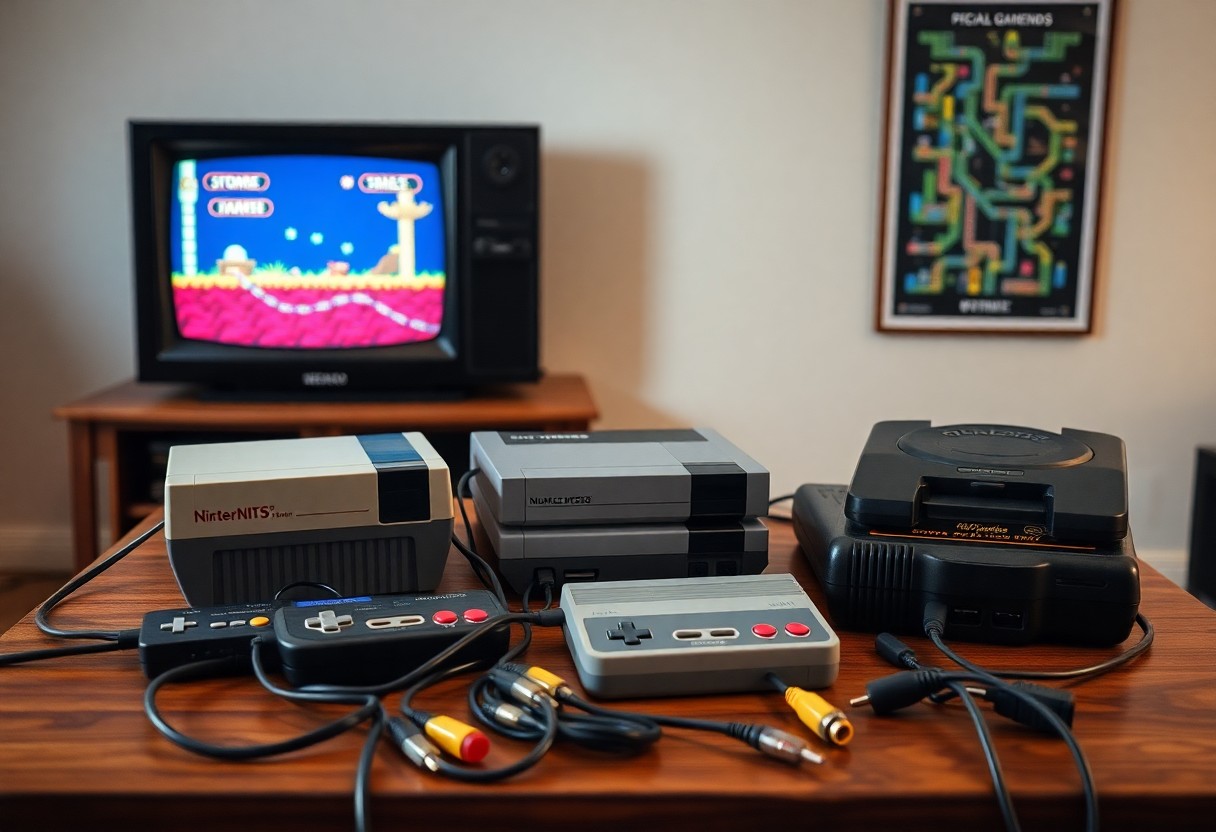
Just you feel nostalgia for pixel art and chiptune soundtracks, and collectible cartridges now fetch high prices while indie ports revive classics; you risk hardware failures and fading preservation, yet affordable emulation and community passion revive play.
Key Factors Driving the Retro Resurgence
- Nostalgia
- Simplicity
- Accessibility
- Preservation
- Community
You notice collector markets, indie remasters, and content creators amplifying interest in older titles while preservation projects and official reissues lower barriers to play. Any renewed availability of authentic hardware or well-crafted ports makes it simpler for you to revisit and share those formative experiences.
The Psychological Power of Nostalgia
Nostalgia drives you to seek familiar mechanics and soundtracks because they trigger positive memories and reduce stress, creating a comforting loop that encourages replay and social storytelling among peers.
Appreciation for Simple and Intuitive Game Design
Simplicity lets you pick up controls quickly and focus on skill, so you spend less time learning menus and more time mastering satisfying challenges that are easy to stream or recommend.
Gameplay that emphasizes short, rewarding loops suits your busy schedule and promotes community-driven tactics and shared highlights, reinforcing the value of core mechanics over feature bloat.
Exploring Different Types of Retro Gaming Experiences
You can move between playing on original hardware, setting up cabinets, or using modern ports, each choice trading authenticity for convenience. Local preservation efforts and collector communities shape availability and the value you place on physical media.
Retro fans often weigh nostalgia against practicality, so you’ll consider cost, compatibility, and long-term preservation when choosing how to play.
| Original consoles | Highest authenticity; maintenance required |
| Handhelds | Portable nostalgia; battery and screen issues |
| Arcade cabinets | Authentic feel; space and cost intensive |
| Emulation/ROMs | Convenient and cheap; legal and accuracy concerns |
| Mini consoles/Re-releases | Plug-and-play ease; curated selections |
- Original Hardware
- Emulation
- Mini Consoles
- Collecting
Original Hardware and Physical Media Collecting
Collectors often hunt for boxed copies and working cartridges, so you’ll face high prices and fragility but gain unmatched authenticity and the tactile satisfaction of original gameplay.
Modern Re-releases and Plug-and-Play Mini Consoles
Companies now release compact systems and official compilations so you can access classics with little setup, enjoying convenience and often improved displays while accepting some emulation differences.
Knowing you can obtain curated libraries affordably, you should still assess emulation accuracy and potential title omissions tied to licensing.

Why Retro Gaming Is Making a Comeback
You balance the allure of tactile authenticity against modern convenience when choosing between vintage hardware and emulation; the table below lays out the trade-offs so you can decide which matters most to your experience.
Pros and Cons: Vintage Systems vs Emulation
| Vintage Systems | Emulation |
|---|---|
| True hardware behavior and timing | Recreates behavior but can have accuracy gaps |
| Original controllers and CRT look | Controller mapping and filters for modern displays |
| Authentic audio and visual quirks | Upscaling and shaders to mimic originals |
| Limited library, often rare cartridges | Vast libraries and easy access |
| High resale value and maintenance needs | Lower upfront cost but may need powerful PC |
| Physical preservation concerns | Archival ease and digital backups |
| Clear ownership of your copy | Possible legal ambiguity over ROMs |
| Immersive, hands-on experience | Convenience: save states, patches, customization |
Authenticity and Tactile Feedback of Classic Consoles
Classic consoles give you the original feel with controller weight, cartridge clicks, and hardware quirks that shape gameplay; expect genuine tactile feedback alongside increased wear-and-tear risk for aging components.
Cost and Convenience of Digital Emulation Software
Emulation lets you access huge libraries instantly and use save states and patches so you can play more for less, although you may encounter timing differences and controller feel mismatches that affect competitive or nostalgic play.
Beyond upfront savings, you should plan for occasional costs like high-performance hardware, specialized controllers, or front-end software; weigh long-term affordability against possible performance trade-offs when accuracy matters.
Step-by-Step Guide to Building a Retro Setup
| Selecting Your Preferred Era and Platform |
Selecting Your Preferred Era and PlatformYou should choose the era based on the games you want to play and how authentic you want the experience to feel; think about cartridge versus disc, controller type, and parts availability. Focus on community support and aftermarket parts so you can source repairs and upgrades, and mark platform compatibility as a top criterion when buying consoles or accessories. |
| Connecting Legacy Hardware to Modern Displays |
Connecting Legacy Hardware to Modern DisplaysChoosing display options requires you to balance authenticity with convenience: original CRTs deliver the correct scanlines, while HDMI scalers let you use contemporary TVs. Seek out high-quality scalers to keep input lag low and maintain proper sync when converting analog signals to digital. When adapting cables and converters you must verify signal types and pinouts to avoid damage; cheap converters can introduce noise or even stress vintage outputs. Use shielded cables and regulated power supplies, and consider community-tested adapters to protect your gear and preserve image quality. |
Essential Tips for Maintaining a Classic Collection
You should keep a detailed inventory with photos and provenance notes so you can track condition and provenance for your retro gaming pieces; preserve manuals and boxes to protect long-term value.
Keep routine checks on controllers, carts, and cables to catch corrosion early and avoid expensive repairs; store documentation in acid-free sleeves for your classic collection.
- Store cartridges upright in dust-free sleeves.
- Clean contacts with isopropyl alcohol and gentle tools.
- Record serials, receipts, and provenance photos.
Proper Storage and Component Preservation
Shelve items in a cool, dry area away from direct sunlight and sudden temperature swings to prevent mold and corrosion from damaging boards and labels.
Avoid stacking heavy boxes on consoles, keep cartridges upright, and use silica gel packs and ventilated cases so you maintain stable conditions for long-term preservation.
Navigating the Second-Hand Market for Authentic Titles
Check seller photos for consistent wear, correct labels, and matching serial numbers so you can spot forgeries or rebuilt cartridges before bidding.
Inspect items in person when possible for odor, electrolyte leakage, or aftermarket stickers; verify region codes and PCB markings to confirm authentic titles.
Thou should prefer sellers with clear feedback, use price guides and community forums for comparables, and consider escrow services on high-value purchases to protect your investment.
Final Words
To wrap up you should note that retro gaming is resurging because you prize straightforward mechanics, nostalgic design, and affordable access to classics. You benefit from active communities, accessible reissues, and indie projects that honor old styles while offering modern fixes, so you reconnect with play that feels immediate and rewarding.